Your Guide to Starter Homes in Today’s Housing Market: Do They Still Exist?
Key takeaways:
- A starter home is typically the most affordable home available in a local market, whether that’s a single-family home, condo, or townhouse.
- The median U.S. starter home costs $262,317 in 2026 and requires an estimated household income of about $80,000.
- While affordability challenges remain, buyers have more options than they did a few years ago, particularly in parts of the Midwest, Northeast, and South.
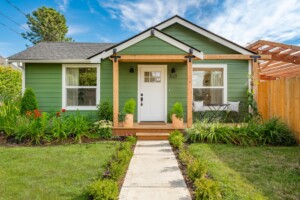
If you’re thinking about buying your first place, a starter home can be your launchpad into homeownership. Typically the most affordable option for first-time buyers, starter homes are usually smaller with fewer frills or features and come with a more manageable price tag.
Buying one still isn’t easy. Home prices have climbed significantly over the last decade, and affordability remains a hurdle in much of the country. But conditions have shifted somewhat in buyers’ favor recently—housing inventory is near its highest point since the pandemic, and sellers currently outnumber buyers nationwide, giving house hunters more room to negotiate than they’ve had in years.
Where those options show up still depends heavily on location. In some markets, a starter home could look like a single-family house with a yard. In others, it’s a condo, townhouse, or fixer-upper. Here’s what starter homes cost, where to find deals, and whether buying one still makes sense in today’s housing market.
What is a starter home?
Historically, starter homes were smaller, more affordable houses designed to help first-time buyers enter the market. Often averaging 1,200 square feet with a few bedrooms and one or two baths, these homes sometimes came with trade-offs like less desirable locations or fewer upgrades.
Now, a home’s price is likely to define if it’s a starter home. Redfin defines starter homes as those priced in the lower third of their local market—meaning what counts as a starter home depends entirely on where you’re buying. In more affordable places, a starter home might be a modest single-family house with a yard. In high cost-of-living areas, it’s more likely to be a smaller condo, townhouse, or a property that needs some TLC.
How much does a starter home cost?
The median price of a starter home is currently $262,317, and the average income needed to afford one is about $80,000. Generally, the cost of a starter home is priced below the average home in any given area, usually falling within the lower third of the local market’s housing prices. In context of the broader market, the median price of all homes for sale is almost $400,000.
But the national average and the cost of houses for sale in your area can look drastically different. In many places, rising home prices, insurance premiums, and cost of living have outpaced income growth, making affordability a big challenge.
“While many people make enough on paper to afford a starter home, they often have other expenses like student debt that are preventing them from buying,” says Blakely Minton, a former Philadelphia-based Redfin agent.
But that doesn’t mean buying a starter home is impossible. Here’s a look at what starter homes cost in 15 of the country’s most populous metros, and the income needed to afford one.
Starter home prices and income needed in the 15 largest U.S. metros
| Metro Area | Income needed to afford median priced starter home | Median starter home sale price | Estimated median household income | % of starter homes available at median income |
| New York City, NY | $165,507 | $468,810 | $98,287 | 1.6% |
| Los Angeles, CA | $182,887 | $639,365 | $97,775 | 0% |
| Chicago, IL | $68,488 | $235,647 | $98,502 | 94.6% |
| Houston, TX | $83,759 | $242,495 | $90,865 | 94.3% |
| Atlanta, GA | $87,116 | $275,000 | $98,778 | 70.9% |
| Dallas, TX | $101,150 | $290,109 | $103,144 | 82% |
| Washington, DC | $123,599 | $391,811 | $141,029 | 81.9% |
| Phoenix, AZ | $102,389 | $346,839 | $95,979 | 27.3% |
| Riverside, CA | $124,167 | $424,192 | $97,116 | 4.4% |
| Boston, MA | $151,248 | $508,442 | $127,467 | 8.7% |
| Minneapolis, MN | $90,915 | $283,081 | $108,714 | 91.9% |
| San Diego, CA | $186,376 | $649,054 | $115,304 | 0% |
| Anaheim, CA | $247,185 | $757,991 | $126,178 | 0% |
| Tampa, FL | $80,828 | $253,659 | $81,390 | 52.5% |
| Seattle, WA | $180,392 | $576,839 | $131,404 | 10.6% |
Redfin data last updated April 2026. In Redfin’s starter-home analysis, we used a 3.5% down payment and a home price in the 5th-35th percentile of its local market’s price range. A home is named “affordable” if the total monthly payment is ≤30% of gross income, + property taxes and insurance calculated as 1.25% annually.
Where can I find affordable starter homes?
Affordable starter homes can still be found across much of the Midwest and parts of the Northeast, and some Southern states. Buyers willing to expand their search beyond the country’s priciest coastal markets will typically find more options and lower price points.
Detroit, Pittsburgh, Cleveland, St. Louis, Cincinnati, and Indianapolis all rank among the most affordable large metros for starter-home buyers, with entry-level homes selling well below the national median starter-home price, according to Redfin data.
Most affordable cities to buy a starter home
We looked at the 50 most populous metros in the country to find the most affordable cities to buy a starter home.
| City/Metro Area | Median Starter Home Sale Price |
| Detroit, MI | $98,272 |
| Pittsburgh, PA | $141,778 |
| Cleveland, OH | $142,510 |
| St. Louis, MO | $153,592 |
| Philadelphia, PA | $173,150 |
| Warren, MI | $200,000 |
| Cincinnati, OH | $207,978 |
| Indianapolis, IN | $208,292 |
| San Antonio, TX | $218,430 |
| Kansas City, MO | $219,813 |
| Milwaukee, WI | $225,000 |
| Columbus, OH | $225,114 |
| Chicago, IL | $235,647 |
| Houston, TX | $242,495 |
| Baltimore, MD | $246,974 |
Redfin data last updated April 2026, “city” being defined as one of the 50 most populous metros. A starter home is defined as being in the 5th-35th percentile of its local market’s price range.
How long should I stay in a starter home?
In the past, many homeowners stayed for an average of 5-6 years building equity. However, it’s now common to see homeowners stay put longer, averaging 12 years in many parts of the country. First-time buyers in particular are taking longer in their search for a home that may meet their needs more long-term, with some even skipping a starter home altogether.
But there isn’t a hard and fast rule for how long someone should stay in a starter home. Maybe your family grows, you get a new job that requires a move, or your financial situation changes, allowing you to look for a bigger or more permanent “forever home.”
Starter home vs. forever home vs. renting
Deciding whether to rent, buy a starter home, or stretch for a forever home is a highly personal decision, often dependent on finances, timelines, and long-term goals.
- Renting makes sense if you’re still building savings, expect to move in the next few years, or want less financial responsibility day-to-day. You won’t build equity, but you also won’t have to deal with home repairs, and you’ll keep more flexibility. In higher cost of living cities, renting can even be more affordable than owning a home—monthly costs for an equivalent home can run significantly higher than rent.
- Buying a starter home is the middle ground. Each mortgage payment builds equity rather than going to a landlord, and a fixed-rate mortgage gives you predictable monthly costs that rent can’t guarantee. But there are trade-offs: higher upfront costs than renting—down payment, closing costs, inspections—less flexibility to move quickly, and a home that might not have everything you want. But for buyers who plan to stay put for at least a few years, it can be a solid pathway into long-term wealth-building.
- A forever home might offer more space, more personalization, and less chance of uprooting, but that often comes with a higher purchase price, larger down payment, and more ongoing maintenance. For first-time buyers, stretching the budget to get into a forever home off the bat can mean overextending financially, especially if life circumstances change. Some buyers might decide to rent while saving for a more long-term home, instead of investing in a starter home as a step up to the larger purchase.
There’s no one-size-fits-all answer. For some buyers, a starter home is simply a stepping stone. For others, it becomes the home they stay in for years—or even for good.
6 tips for buying a starter home
Buying a starter home looks a little different than buying any other home. You’re not necessarily searching for a home that has every single thing on your wishlist—you’re looking for the right first home, which means making smart trade-offs now so you’re in a stronger position later.
1. Stay flexible on home type
In today’s market, a starter home might not look like the single-family house you pictured. A condo, townhouse, fixer-upper, or even a manufactured home can be a first step into homeownership, and in many markets, they’re the most realistic entry point. Widening your search to include different property types opens up more options and can put homeownership within reach sooner.
When Taylor Jayne couldn’t afford a traditional home in the Hamptons—where the median sale price hovers around $1.7 million—she bought a 700-square-foot, two-bedroom mobile home for $150,000 instead. She and her fiancé have been renovating it themselves ever since, turning what she calls the “cheapest home in the Hamptons” into a retro surf shack they now can’t imagine leaving. “This was our way of getting our foot in the door when the door felt completely closed,” she says
2. Prioritize affordability over perfection
A starter home doesn’t need to check every box, but it does need to fit your budget. A common guideline is to keep your monthly mortgage payment at or below 30% of your gross monthly income, though more and more homebuyers are pushing that number higher—a home affordability calculator can help you get an idea of how much house you can afford. Overextending to get a home closer to your ideal can leave you house-poor and limit your ability to build savings, handle repairs, or move up when the time comes.
3. Think about resale potential
Even if you plan to stay for several years, it’s worth buying a starter home with an eventual sale in mind. Look for homes in neighborhoods with big positives for future buyers, like good schools, commute access, and signs of growth in the area. A home with stronger appeal is easier to sell and more likely to appreciate, which means the equity you build can do more for you later.
4. Budget for maintenance and repairs
Entry-level homes are often older or in need of updates, and those costs can add up. A standard rule of thumb is to set aside 1–2% of your home’s value each year for maintenance and repairs, or about $2,600–$5,200 per year on a $260,000 home. Put this into your budget before you buy, not after, so a maintenance emergency is less likely to drain remaining savings after move-in.
5. Research first-time buyer programs
If a conventional mortgage feels out of reach, there are local and federal-level first-time homebuyer programs that might be able to help. FHA loans allow down payments as low as 3.5% with a credit score of 580 or higher, while Fannie Mae’s HomeReady and Freddie Mac’s Home Possible programs offer 3% down options for income-eligible buyers. Many states and counties also offer down payment assistance in the form of grants or forgivable loans, so it’s worth checking your state housing finance agency’s website or the HUD program directory to see what’s available where you live.
6. Think about house hacking
House hacking is using part of your home, like a spare bedroom, basement, or ADU, to help cover the mortgage. It can be especially useful for first-time buyers priced out of larger single-family homes, since rental income can offset a payment and make a pricier market more attainable. Check local zoning rules and your lender’s guidelines before you commit, since not every property or loan program allows it.
Bottom line: It’s still possible to buy a starter home
Starter homes are harder to find than they once were, squeezed by high demand, limited inventory compared to years past, and rising construction costs. But they’re not completely out of reach.
Buyers currently have more leverage than they’ve had in years, and Redfin economists expect that trend to continue. Wages have been growing faster than home prices since late 2025, which should keep chipping away at the affordability gap in the years ahead.
For buyers willing to stay flexible on home type, location, and financing, a starter home is still one of the clearest paths into homeownership right now.
The post Your Guide to Starter Homes in Today’s Housing Market: Do They Still Exist? appeared first on Redfin | Real Estate Tips for Home Buying, Selling & More.
from Redfin | Real Estate Tips for Home Buying, Selling & More https://www.redfin.com/blog/what-is-a-starter-home/


Nhận xét
Đăng nhận xét