What Is the Average Home Value Increase Per Year?
U.S. homeowners have seen substantial gains in home values over the past decade, although appreciation has slowed considerably from the rapid pace experienced during the pandemic housing boom. Even with today’s more moderate growth, many homeowners continue to benefit from years of accumulated equity.
In this post, we’ll look at the average home value increase per year, explore the factors driving home appreciation, how to calculate your home’s value, and how to leverage your equity as you plan your next financial move.

How Much Is Your Home Worth Now?
Home values have rapidly increased in recent years. How much is your current home worth now? Get a ballpark estimate from HomeLight’s free Home Value Estimator.
What is home appreciation?
Home appreciation refers to the increase in a property’s value over time. It’s driven by a combination of market conditions, buyer demand, and property improvements. It can be beneficial for homeowners and investors, as it can lead to:
- Higher equity: A higher home value can increase the amount of equity in a home.
- Larger profits: When a home is sold, a higher value can lead to a larger profit.
- Increased rental income: For investors, a higher home value can lead to increased monthly rental income.
While most homes naturally appreciate over the years, factors like location, nearby developments, and overall economic conditions also play a significant role.
What is the average home value increase per year?
On average, U.S. home prices have increased by roughly 4% to 5% per year over the past decade, according to the Federal Housing Finance Agency (FHFA).
While appreciation exceeded 17% during the pandemic-era housing boom in 2021 and 2022, annual price growth has since returned to a more typical pace. National home prices increased 2.9% year over year in the second quarter of 2025, following gains of 5.9% in the second quarter of 2024. This data reflects a cooler but still growing housing market.
The chart below shows the percentage of home price appreciation for the past 11 years using second-quarter data from the FHFA’s House Price Index (HPI).
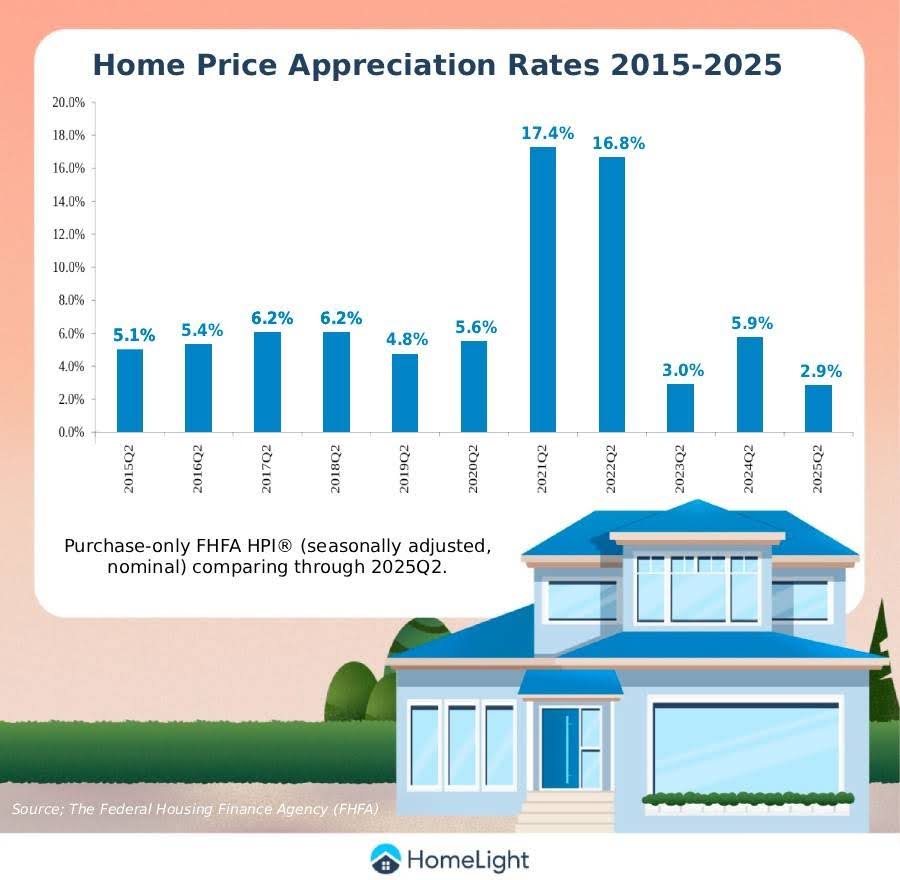
Market conditions, buyer demand, and inflation all impact these fluctuations. By keeping an eye on yearly appreciation trends, you can get a better sense of how much your home may have increased in value and what that means for your financial goals.
How do I estimate my home value?
Estimating your home’s value involves considering factors like recent sales in your area, the condition of your home, and local market trends. You can start by checking online real estate platforms that offer free home value estimates, or you can consult a local real estate agent for a more accurate assessment through a comparative market analysis (CMA).
Additionally, if you’ve made significant improvements to your home, those upgrades may further increase your property’s value.
Home value estimates are a good starting point, but keep in mind that an official appraisal will provide the most reliable figure when you’re ready to sell or tap into your home equity.
How do I estimate my current home equity?
Home equity is the difference between what you owe on your mortgage and the current market value of your home. To estimate your equity, subtract the remaining balance on your mortgage from your home’s estimated value.
For example, if your home is worth $500,000 and you owe $300,000, your equity would be $200,000. As your home appreciates, your equity grows, allowing you to borrow against it or sell the property for a profit. Keep in mind that calculating home equity is just one step — lenders will typically require a formal appraisal if you’re applying for a loan or home equity line of credit (HELOC).
from HomeLight Blog https://www.homelight.com/blog/average-home-value-increase-per-year/


Nhận xét
Đăng nhận xét